How to Rank Your Website on Google: Complete SEO Guide for Higher Rankings
How to Rank Your Website on Google: A Complete SEO Guide to Increase Website Traffic and Business Growth
Introduction: Having a Website Is Not Enough – Your Customers Must Be Able to Find It!
In today's digital world, having a professional website is essential for every business. Whether you run a small business, startup, educational institution, e-commerce store, real estate company, travel agency, or professional service, your website acts as your online identity.
But there is one important question:
What is the benefit of having a beautiful website if your potential customers cannot find it on Google?
Imagine someone searching on Google for:
Best web development company near me.
Affordable digital marketing services.
Website development company in Delhi.
Best travel agency in India.
Online educational courses.
Real estate services near me.
If your website does not appear prominently in relevant search results, potential customers may discover your competitors instead.
This is where Search Engine Optimization (SEO) becomes important.
SEO is the process of improving your website's content, technical structure, user experience, and online authority so that search engines can understand your website and present its pages to relevant users.
At Kdigitallia Solutions, we understand that website development and SEO should work together. That is why we focus on developing professional, SEO-friendly websites that provide a strong foundation for businesses looking to establish and grow their online presence.
In this article, we will explain how Google Search works, the different types of SEO, important ranking factors, and practical strategies that can help your website improve its visibility on Google.
1. What Is SEO (Search Engine Optimization)?
SEO stands for Search Engine Optimization.
It refers to the process of improving a website so that search engines such as Google can crawl, understand, index, and potentially rank its pages for relevant search queries.
The main objectives of SEO are:
Increase organic website traffic.
Improve visibility on Google.
Reach potential customers searching for your products or services.
Build online credibility and trust.
Generate quality business leads.
Improve brand awareness.
Increase opportunities for sales and conversions.
Unlike paid advertising, organic SEO does not require you to pay Google for every click. However, SEO requires investment in quality content, technical improvements, research, and continuous optimization.
Important: SEO does not guarantee the number-one position on Google. Search rankings depend on many factors, competition, relevance, quality, and Google's evolving algorithms.
2. How Does Google Search Work?
Before optimizing a website, it is important to understand how Google Search works.
Google generally follows three major stages:
A. Crawling
Google uses automated programs called crawlers, including Googlebot, to discover website pages and follow links.
A properly structured website makes it easier for search engines to discover important pages.
B. Indexing
After discovering a page, Google analyzes its content, images, videos, and other information to understand what the page is about.
If a page meets Google's requirements, it may be included in Google's search index.
C. Ranking
When someone searches on Google, its systems evaluate numerous signals to identify the pages that are most relevant and useful for that particular search.
These signals can include:
Search intent.
Content relevance and quality.
Website usability.
Page experience.
Location and language.
Page authority and reputation.
Freshness, where relevant.
Your goal should be to create a website that provides useful information and a positive experience for visitors.
3. Different Types of SEO Every Website Needs
A successful SEO strategy involves several areas of optimization.
1. On-Page SEO
On-page SEO involves optimizing individual website pages and their content.
Important activities include:
Keyword research.
SEO-friendly page titles.
Meta descriptions.
Proper heading structure (H1, H2, H3).
Relevant internal linking.
Image optimization and descriptive alt text.
High-quality and original content.
Readable URLs.
Content that matches user search intent.
For example, if you provide web development services in Delhi, your service page should clearly explain your services, technologies, expertise, and the areas you serve.
2. Technical SEO
Technical SEO focuses on the technical foundation of your website.
Important elements include:
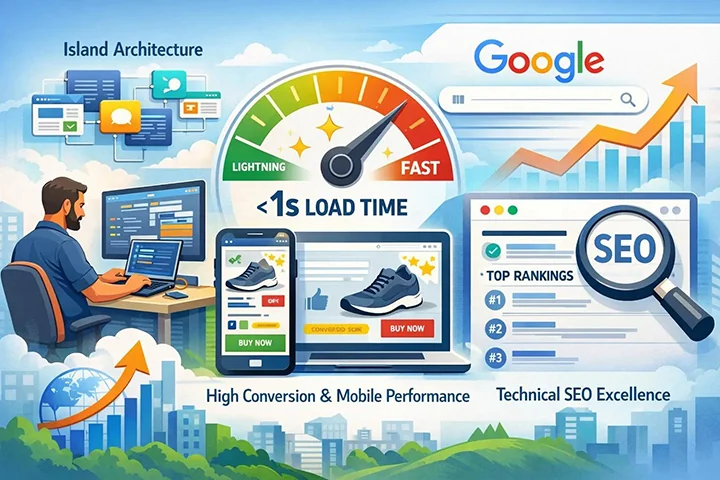
Mobile-friendly website design.
Fast page loading.
Secure HTTPS connection.
XML sitemap.
Proper robots.txt configuration.
Search engine crawlability.
Correct canonical URLs.
Structured data where appropriate.
Fixing broken links.
Managing duplicate content.
Correct redirects.
Core Web Vitals and page experience.
A website may contain excellent content, but technical problems can make it difficult for search engines to access or understand its pages.
3. Off-Page SEO
Off-page SEO includes activities performed outside your website to build its reputation, visibility, and authority.
Examples include:
Earning quality backlinks.
Publishing useful guest articles.
Digital public relations.
Business directory listings.
Brand mentions.
Industry-related collaborations.
Genuine customer reviews.
Backlinks from relevant, trustworthy websites can help establish credibility. However, buying spammy links or participating in manipulative link schemes can harm your website.
4. Local SEO
Local SEO is particularly important for businesses serving customers in a specific city, region, or geographical area.
For example:
Web development company in Delhi.
Digital marketing agency in Pitampura.
Website designer in India.
SEO company near me.
Local SEO activities include:
Creating and optimizing a Google Business Profile.
Maintaining accurate business information.
Adding relevant business categories.
Collecting genuine customer reviews.
Publishing local business information.
Creating location-specific service pages where useful.
Maintaining consistent business contact details.
Local SEO helps eligible businesses improve their visibility in relevant local searches and Google Maps.
5. Content SEO
Content SEO focuses on creating valuable information that answers customers' questions and solves their problems.
Examples include:
Informative blog articles.
Detailed service pages.
Industry guides.
Frequently asked questions.
Product descriptions.
Tutorials and case studies.
Educational resources.
The objective is not simply to publish more articles. It is to publish useful, accurate, original, and relevant information.
4. How to Choose the Right Keywords for Your Website
Keyword research is one of the most important steps in SEO.
Keywords are the words and phrases people enter into Google when searching for products, services, or information.
For example, a website development company may target:
Primary keywords:
Website development company.
Custom web development services.
Professional website development.
Location-based keywords:
Website development company in Delhi.
Web development company in India.
Website developer in North Delhi.
Long-tail keywords:
Affordable custom website development for small businesses.
ASP.NET Core web application development company.
Professional e-commerce website development services.
Long-tail keywords are often more specific and may attract visitors with clearer requirements.
Useful Keyword Research Tools
You can use the following tools to research keywords and understand search opportunities:
Google Keyword Planner.
Google Search Console.
Google Trends.
Ahrefs.
SEMrush.
Ubersuggest.
When selecting keywords, consider:
Search intent.
Search volume.
Keyword competition.
Business relevance.
Customer requirements.
Conversion potential.
Pro Tip: Do not target keywords only because they have high search volume. Choose keywords that are relevant to the products or services your business actually offers.
5. Create High-Quality Content That Google and Your Visitors Find Useful
Content plays a major role in successful SEO.
Google aims to provide users with helpful and relevant search results. Therefore, your website should answer visitors' questions clearly and provide genuine value.
Follow these content optimization practices:
Write Original and Informative Content
Avoid copying content from competitors or other websites.
Create original content based on your expertise, services, customer questions, and industry knowledge.
Use Proper Headings
Organize your content using:
One clear main heading (H1).
Relevant section headings (H2).
Supporting subheadings (H3).
This improves readability and helps visitors understand the structure of your content.
Add Relevant Keywords Naturally
Use your target keywords naturally in:
Page titles.
Main headings.
Introduction.
Relevant subheadings.
Page content.
Image alt text, where appropriate.
URLs, where useful.
Avoid keyword stuffing or repeating the same phrase unnaturally.
Add Useful Images and Videos
Relevant images, infographics, screenshots, and videos can make your content easier to understand.
Optimize image file sizes, use descriptive filenames, and add meaningful alt text.
Answer Frequently Asked Questions
Include genuine questions that customers frequently ask about your services.
This improves the usefulness of your pages and helps visitors find important information.
6. Make Your Website Mobile-Friendly and Fast
A large number of people access websites through smartphones.
If your website does not display correctly on mobile devices, visitors may leave before exploring your products or services.
A mobile-friendly website should provide:
Responsive layouts.
Easy navigation.
Readable text.
Properly sized images.
Accessible buttons.
Fast loading.
Convenient contact options.
Website speed is also important for user experience.
Google uses Core Web Vitals to evaluate aspects of page experience.
The three important Core Web Vitals metrics are:
LCP – Largest Contentful Paint: Measures how quickly the main content loads.
INP – Interaction to Next Paint: Measures responsiveness to user interactions.
CLS – Cumulative Layout Shift: Measures unexpected layout movement during page loading.
Improving these metrics can provide a better user experience, although good Core Web Vitals scores do not guarantee higher rankings.
7. Optimize Your Website's URLs, Titles, and Meta Descriptions
Every important website page should have a meaningful title and description.
SEO-Friendly URL Example
Poor URL:
www.example.com/page?id=12345
Better URL:
www.example.com/web-development-services
SEO Title Example
Web Development Services in Delhi | Company Name
Meta Description Example
Looking for professional web development services in Delhi? Explore customized business websites, web portals, and application development solutions.
A good title helps communicate the topic of the page, while a compelling description may encourage users to click your search result.
Google may generate its own search title links and snippets, so the displayed text is not always identical to what you specify.
8. Create an XML Sitemap and Configure Robots.txt
These are important technical SEO elements.
XML Sitemap
An XML sitemap provides search engines with information about important pages on your website.
It helps search engines discover URLs and understand which pages you consider important.
A typical sitemap URL looks like:
https://www.example.com/sitemap.xml
Robots.txt
A robots.txt file provides instructions to compliant search engine crawlers about which areas of a website they may access.
Example:
https://www.example.com/robots.txt
Incorrect robots.txt settings can unintentionally prevent search engines from crawling important pages.
Therefore, its configuration should be handled carefully.
9. Use Google Search Console and Google Analytics
Website optimization should be based on actual performance data.
Two useful tools are Google Search Console and Google Analytics 4.
Google Search Console
Google Search Console helps website owners:
Monitor search performance.
Identify search queries.
Track clicks and impressions.
Check indexing status.
Identify certain technical problems.
Submit XML sitemaps.
Monitor Core Web Vitals reports.
Google Analytics 4
Google Analytics 4 helps businesses understand:
Website visitors.
Traffic sources.
User engagement.
Popular pages.
Conversion events.
Customer journeys.
By using these tools together, businesses can better understand how visitors discover and interact with their websites.
10. Build Quality Backlinks to Improve Website Authority
Backlinks are links from other websites pointing to your website.
For example, if an industry publication publishes an article about your company and links to your website, that is a backlink.
You can earn relevant backlinks through:
Useful industry articles.
Original research.
Business partnerships.
Genuine media coverage.
Industry associations.
Helpful educational resources.
Relevant guest contributions.
Focus on relevance and editorial quality rather than the total number of backlinks.
Avoid automated link-building schemes, paid link manipulation, and low-quality link farms.
11. How Long Does It Take for a Website to Rank on Google?
This is one of the most frequently asked questions by website owners.
There is no fixed timeline for achieving Google rankings.
The time required depends on several factors:
Website age and history.
Industry competition.
Keyword difficulty.
Content quality.
Website technical condition.
Backlink profile.
Search intent.
Website authority and reputation.
Frequency and quality of optimization.
For a new website, Google may need time to discover, crawl, and index its pages.
Meaningful SEO improvements can take several months, and highly competitive keywords may require longer-term efforts.
It is important to remember that SEO is a continuous investment rather than a one-time activity.
No genuine SEO company can guarantee the number-one position on Google. A professional SEO strategy focuses on measurable improvements in organic visibility, relevant traffic, and business enquiries.
Conclusion: Build an SEO-Friendly Website with Kdigitallia Solutions
A successful online business requires more than just a website. It requires visibility, quality content, excellent user experience, technical performance, and a consistent digital marketing strategy.
Search Engine Optimization helps businesses reach people who are actively searching for their products and services.
By combining professional website development with proper SEO practices, businesses can build a stronger digital presence and create more opportunities for long-term growth.
At Kdigitallia Solutions, we develop professional, customized, and SEO-friendly websites designed to support your business objectives.
Whether you are launching a new business website, improving an existing website, developing a custom web portal, or looking to strengthen your Google search visibility, we are ready to help you take the next step.